Python · Robotics · Physical AI · Data Platform · Open Source
Mosaico
Contribution work on an open data platform for robotics and physical AI.
A contribution-oriented case study around workflow boundaries, developer ergonomics, and data-platform integration surfaces in Mosaico.
Why it exists
Robotics and physical-AI systems are both research environments and production candidates at the same time. Teams need fast iteration, but they also need reproducible datasets, reliable jobs, and interfaces that hold up once multiple engineers start depending on them. Mosaico is interesting precisely because it has to serve both modes without collapsing into either one.
Technical center
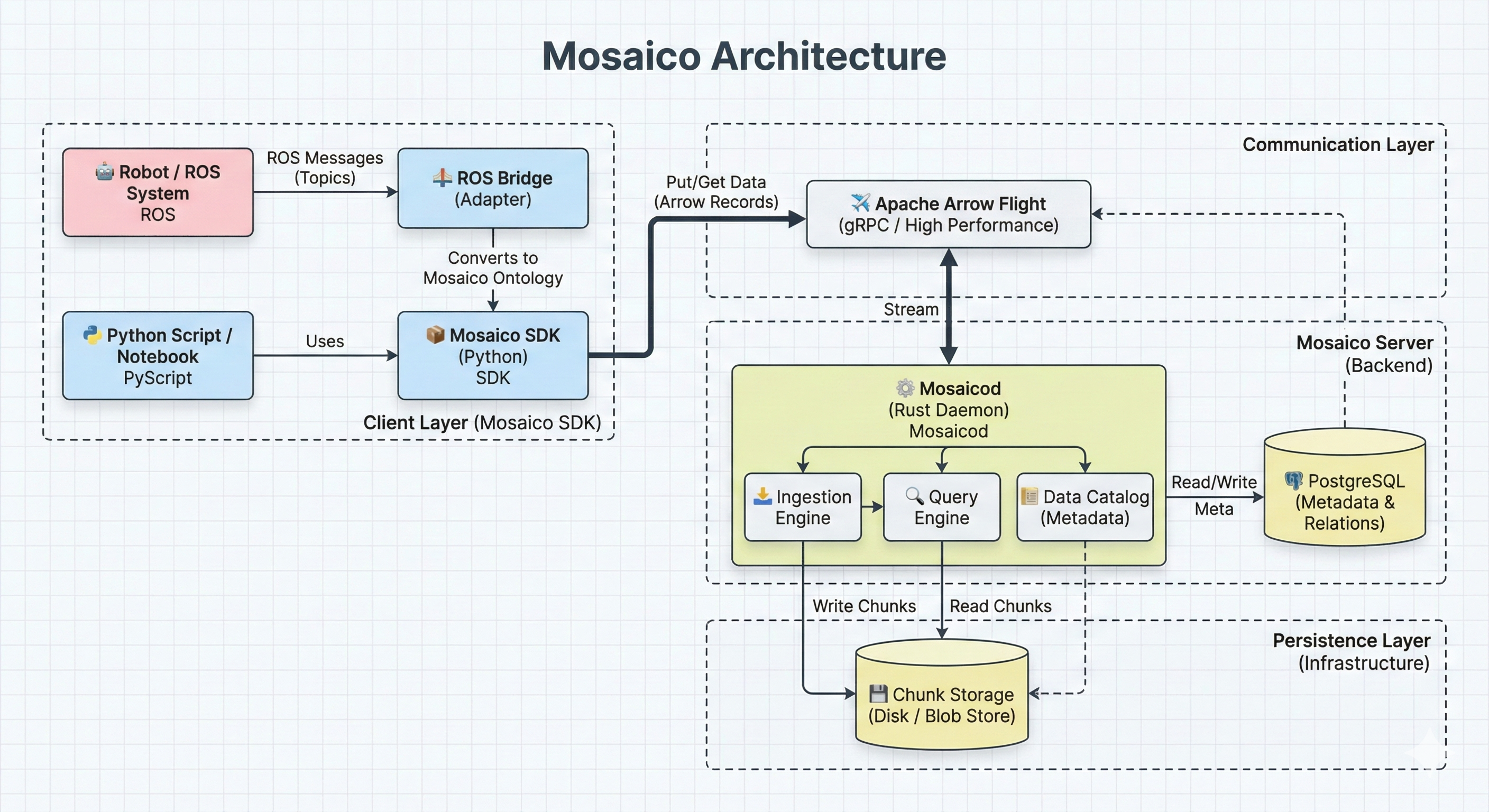
The contribution work sits at integration boundaries: SDK and backend contracts, CI behavior, query ergonomics, and the places where orchestration has to stay debuggable for the next engineer. Each PR targets a seam where platform code meets messy real-world robotics workflows, the spots where convenience abstractions tend to leak the most.
Current proof points
The visible contribution history lands on the workflow boundaries that decide whether a robotics data platform stays usable across teams: CI reliability, query ergonomics, and SDK-server compatibility. The case study treats contribution work as a way to learn a platform from the inside, not as a detached summary.