Apache Arrow · DataFusion · Iceberg Rust · Fluss Rust · Rust OSS
Apache Rust Contributions
Upstream contributions across Arrow, DataFusion, Iceberg Rust, and Fluss Rust driven by real downstream system work.
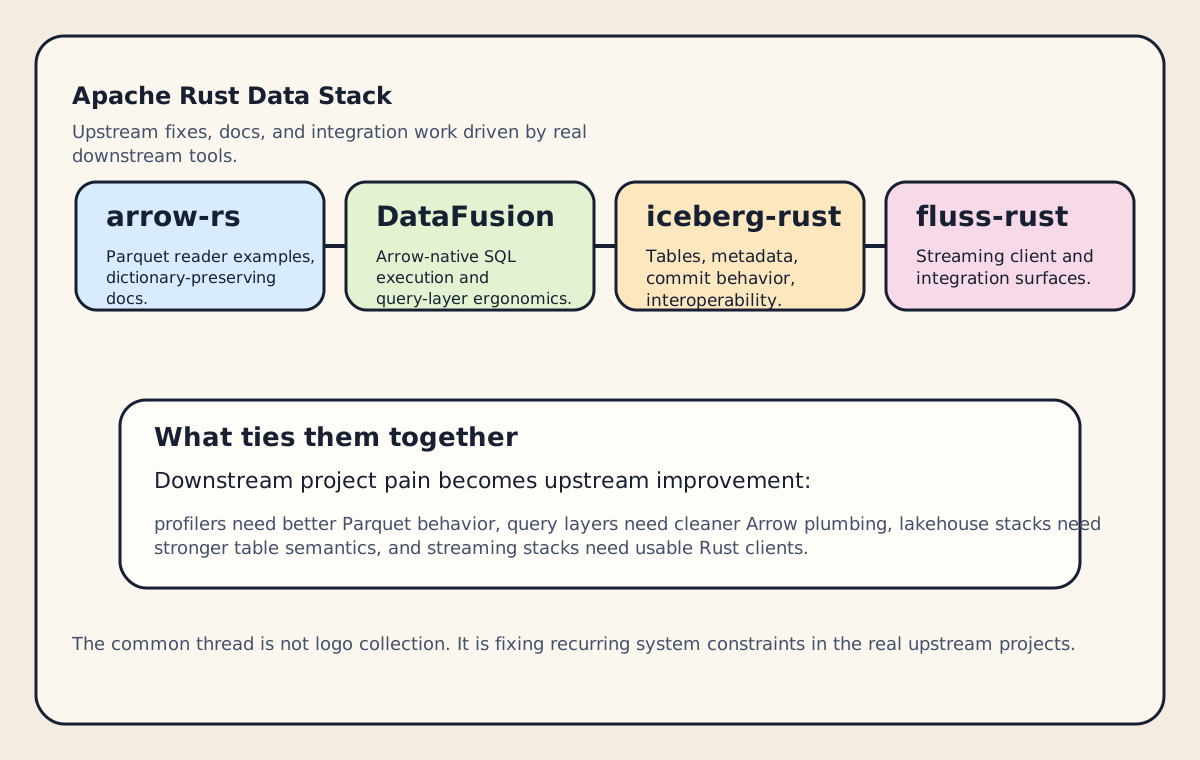
A contribution-oriented case study about using Apache Rust projects as the place to fix recurring system constraints: Parquet reader behavior in arrow-rs, query-engine surfaces in DataFusion, table semantics in iceberg-rust, and streaming client integration in fluss-rust.
Updated from public sources ·
Summer 2026: Arrow correctness
Two merged Arrow PRs address padded-row accounting and importing zero-length Utf8/Binary arrays at a non-zero offset. The latter connects directly to the Arrow input work in dataprof. The separate Iceberg stale-base reproduction is an experiment, not a merged upstream fix.
Why it exists
The value in upstream contribution work is not collecting project logos. It is using the actual substrate of your own systems as the place to remove repeated friction instead of carrying forks, custom docs, or private patches forever. For Rust data work, that substrate is increasingly shared across projects: Arrow memory, DataFusion execution, Iceberg table metadata, and streaming clients all become part of the same practical dependency chain.
Technical center
This contribution track spans the lower layers of the Rust data stack: Parquet reader behavior and examples in arrow-rs, Arrow-native query execution surfaces in DataFusion, table metadata and interoperability concerns in iceberg-rust, and streaming client and integration work in fluss-rust. The work is deliberately close to interfaces and examples because those are the points where downstream tools either become easy to build or quietly inherit confusing edge cases.
Current proof points
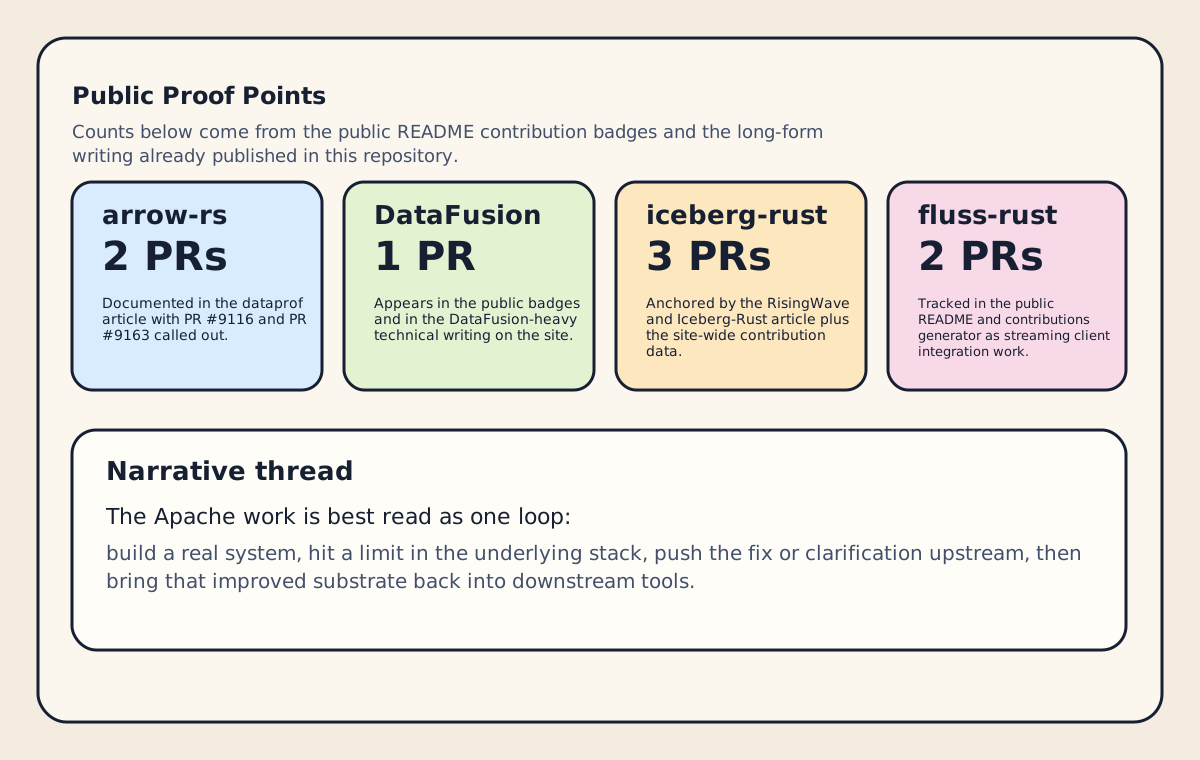
The public repository already shows a concrete footprint rather than vague affiliation: 2 PRs tracked for apache/arrow-rs, 1 for apache/datafusion, 3 for apache/iceberg-rust, and 2 for apache/fluss-rust. The Arrow and Iceberg work is also explained in long-form articles, which matters because the contribution trail is connected back to downstream tools like dataprof and streaming lakehouse experiments instead of sitting as isolated pull requests.