Why it exists
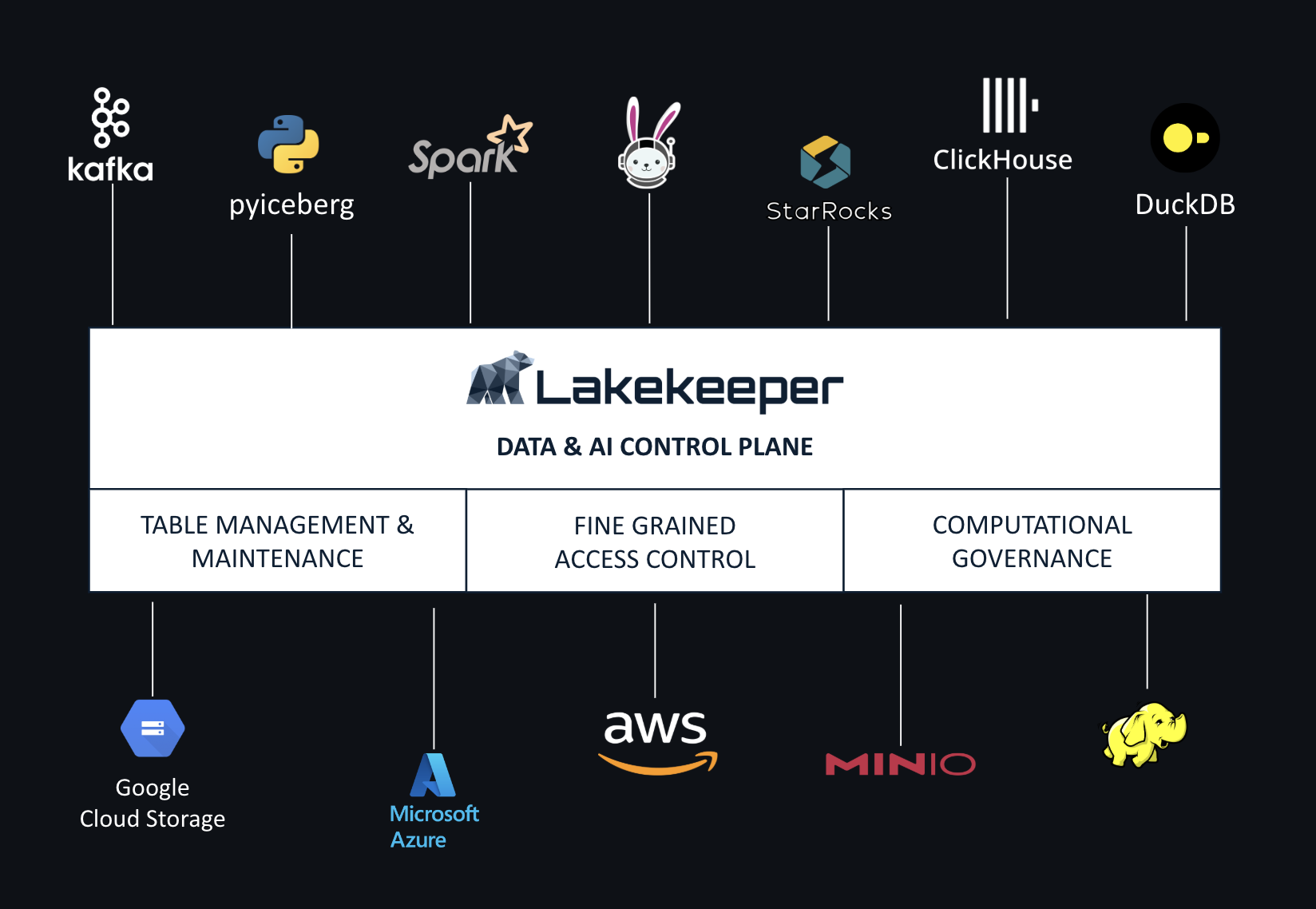
Object storage and open table formats are not enough on their own. A practical lakehouse still needs a catalog that can manage metadata, enforce access, and stay open enough to work across engines and deployment models. Lakekeeper matters because it puts the control plane around Iceberg tables into a Rust-native service that can be reasoned about as infrastructure rather than as an opaque extension of a compute engine.
Technical center
Lakekeeper implements the Iceberg REST catalog in Rust, pairing Postgres-backed metadata with OIDC authentication, OpenFGA authorization, vended cloud credentials, CloudEvents, and a deployment model that stays much lighter than JVM-oriented catalog stacks. The architecture is interesting because the catalog is not only a lookup service: it becomes the place where identity, temporary storage access, namespace management, and cross-engine interoperability meet.
Current proof points
The public footprint is already concrete: a long-form architecture write-up, documented RisingWave interoperability, integrations with external engines and managed platforms, a monthly release cadence, and 2 merged PRs tracked in the repository README rather than a vague claim of familiarity. The case study is especially useful as a catalog-level counterpart to the Rust data stack work: it shows where table metadata, governance, and engine access stop being abstract and become operational interfaces.