Python · Lakehouse · dlt · dbt · Superset
Open Lakehouse Starter
A small-team lakehouse stack with dlt, dbt, Superset, and MinIO.
An open starter environment for small teams that combines ingestion, transformation, storage, and dashboards in a light but expandable lakehouse setup.
Why it exists
Small teams often need a usable lakehouse before they need platform complexity, so the real challenge is choosing a stack that starts light without painting the team into a corner. This starter exists for the moment before a team has a full platform group: they still need ingestion, transformations, dashboards, and object storage, but they need them in a shape that can be understood and replaced piece by piece.
Technical center
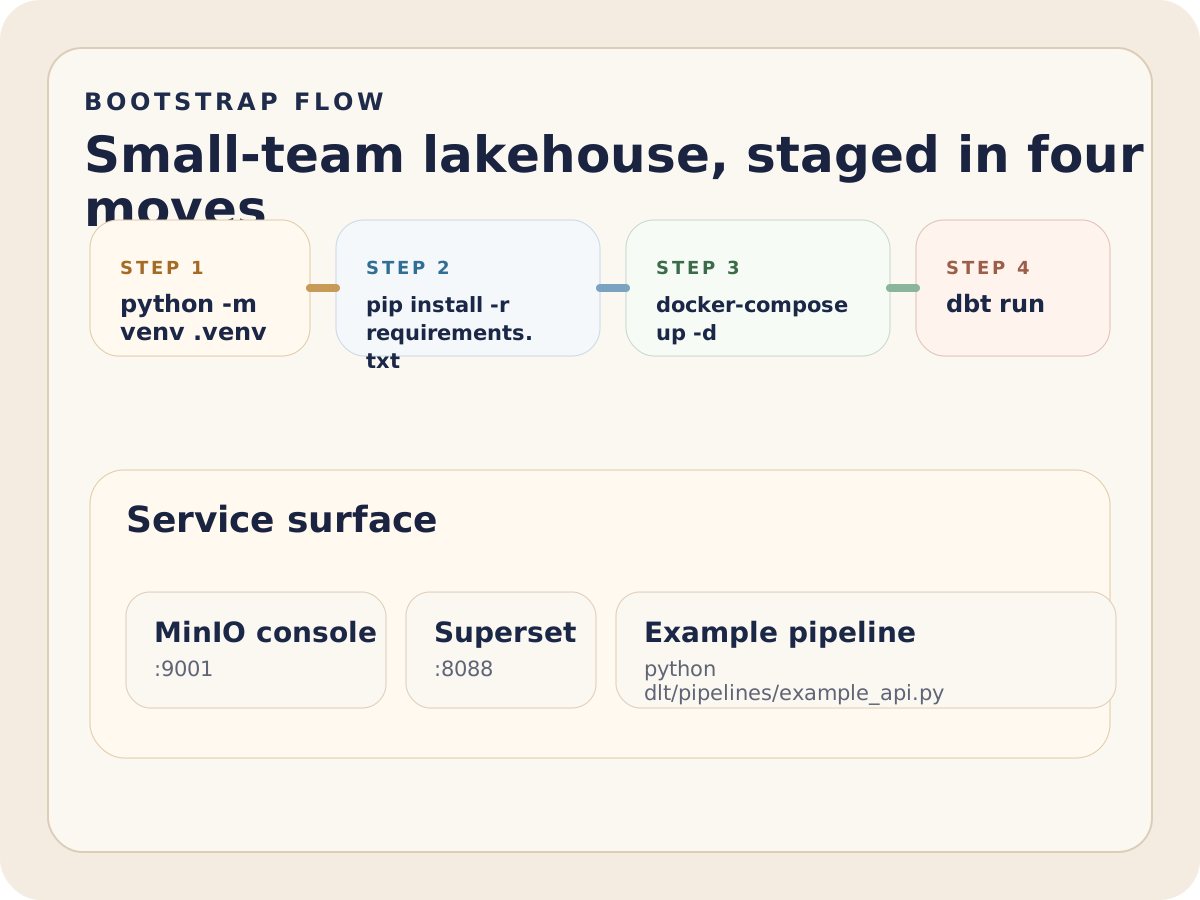
The project combines dlt ingestion, dbt transformations, Superset dashboards, and MinIO-backed object storage into a setup that is intentionally simple to start and expandable later. Each component has a clear job: dlt moves data in, dbt makes transformations explicit, Superset gives immediate analytical feedback, and MinIO keeps the storage path close to S3-compatible production patterns.
Current proof points
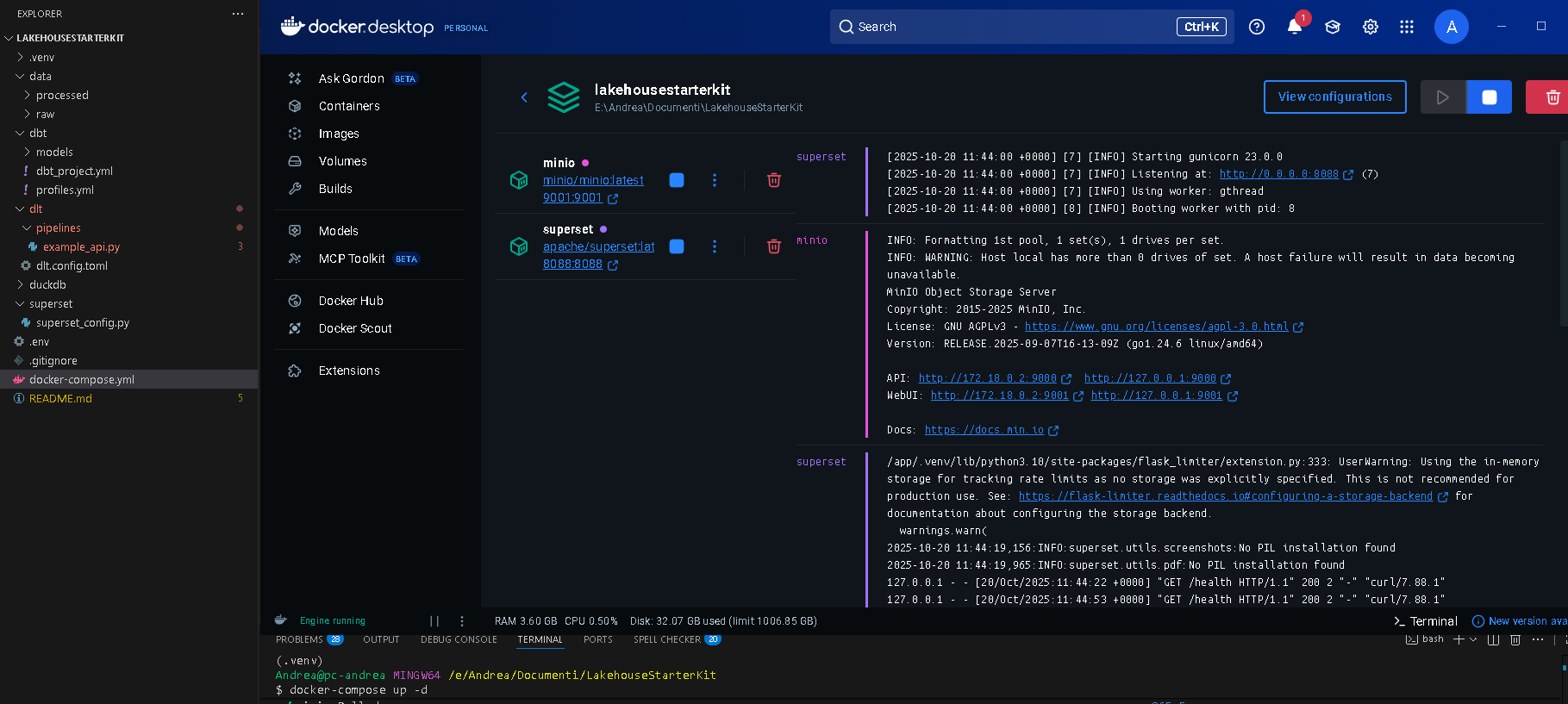
The repo already contains the first real artifact set: a published screenshot, a runnable compose stack, an example dlt API pipeline, staged dbt models, and local credentials for MinIO and Superset that make the small-team bootstrap path concrete rather than aspirational. The important next pressure is documentation and examples that show how a small starter can grow toward stronger catalog, quality, and cost controls without losing its plain local setup.