Why it exists
A personal site should not be a thin profile page if the work itself is systems work. This repository is meant to function as a public front door, a writing archive, and a concrete example of how I like to structure tools and platforms. The site is therefore treated as a real system: content is generated from structured sources, the workbench has a Rust/WASM engine behind it, and the deployment path is part of the story rather than an afterthought.
System shape
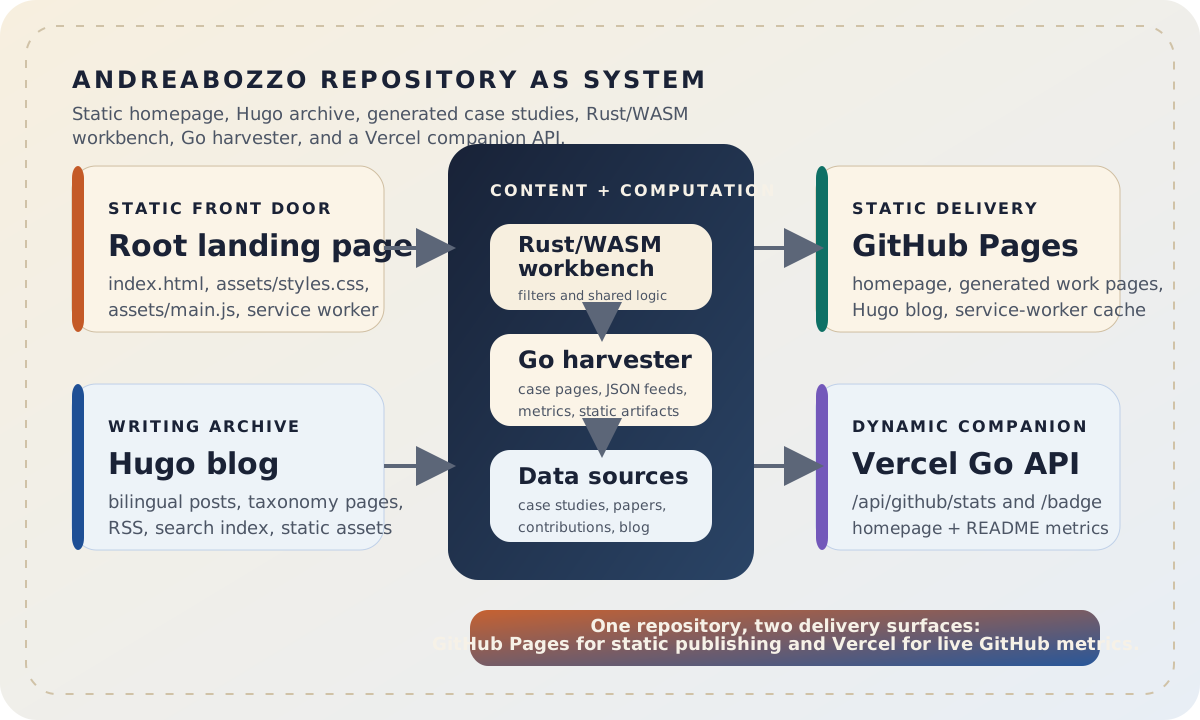
The root site is plain HTML, CSS, and JavaScript, the long-form writing lives in a Hugo blog, the interactive workbench logic is mirrored between JavaScript and Rust compiled to WebAssembly, and generated work pages come from structured JSON rather than hand-maintained HTML. That split keeps the public surface fast and inspectable while allowing richer tooling behind it: Go generators build artifacts, the blog keeps long-form posts organized, and the homepage can behave like a small application.
Technical center
The repository now uses a Go harvester to generate case-study and contribution artifacts, GitHub Actions to assemble and publish the static site on GitHub Pages, and a small Go API on Vercel to expose live GitHub stats and badge endpoints that the homepage can consume. The technical center is the boundary between static reliability and live data: most of the site remains cacheable and simple, while the companion API handles the pieces that genuinely need to change.
Current proof points
The repository already exposes the whole public system path: structured JSON and the Go harvester generate work and contribution artifacts, Hugo builds the blog, the workbench logic is mirrored in JavaScript and Rust/WASM, and GitHub Pages plus the Vercel API split static delivery from live GitHub stats. That makes the site useful both as a portfolio and as an inspectable implementation of the same design preferences shown in the work itself: typed inputs, generated outputs, small services, and clear deployment boundaries.