
One Year, 24 Posts: What Held Up and What Didn't
My first post promised a revolution. My recent ones mostly report what failed. A plain-language look back at a year of writing about data tools, written for readers who have never used any of them.
My first post promised a revolution. My recent ones mostly report what failed. A plain-language look back at a year of writing about data tools, written for readers who have never used any of them.
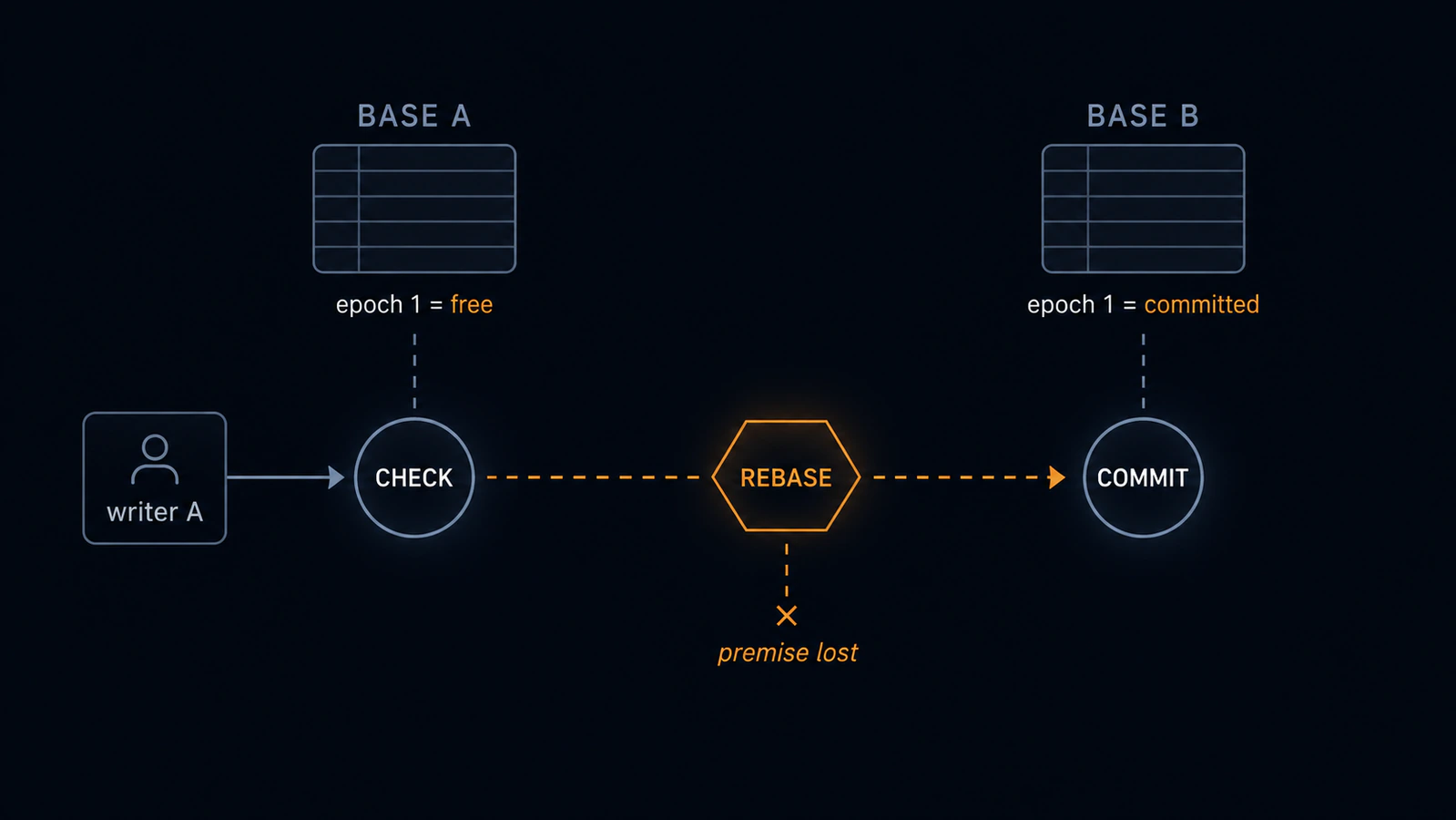
A falsification experiment with a written kill list and a negative result. Delta has a purpose-built idempotent commit; iceberg-rust rebases a transaction onto a base the caller never checked, so an external writer cannot make a commit conditional. The green concurrency test was a false pass — 0 of 40 rounds ever raced — and only a failpoint showed the duplicate.
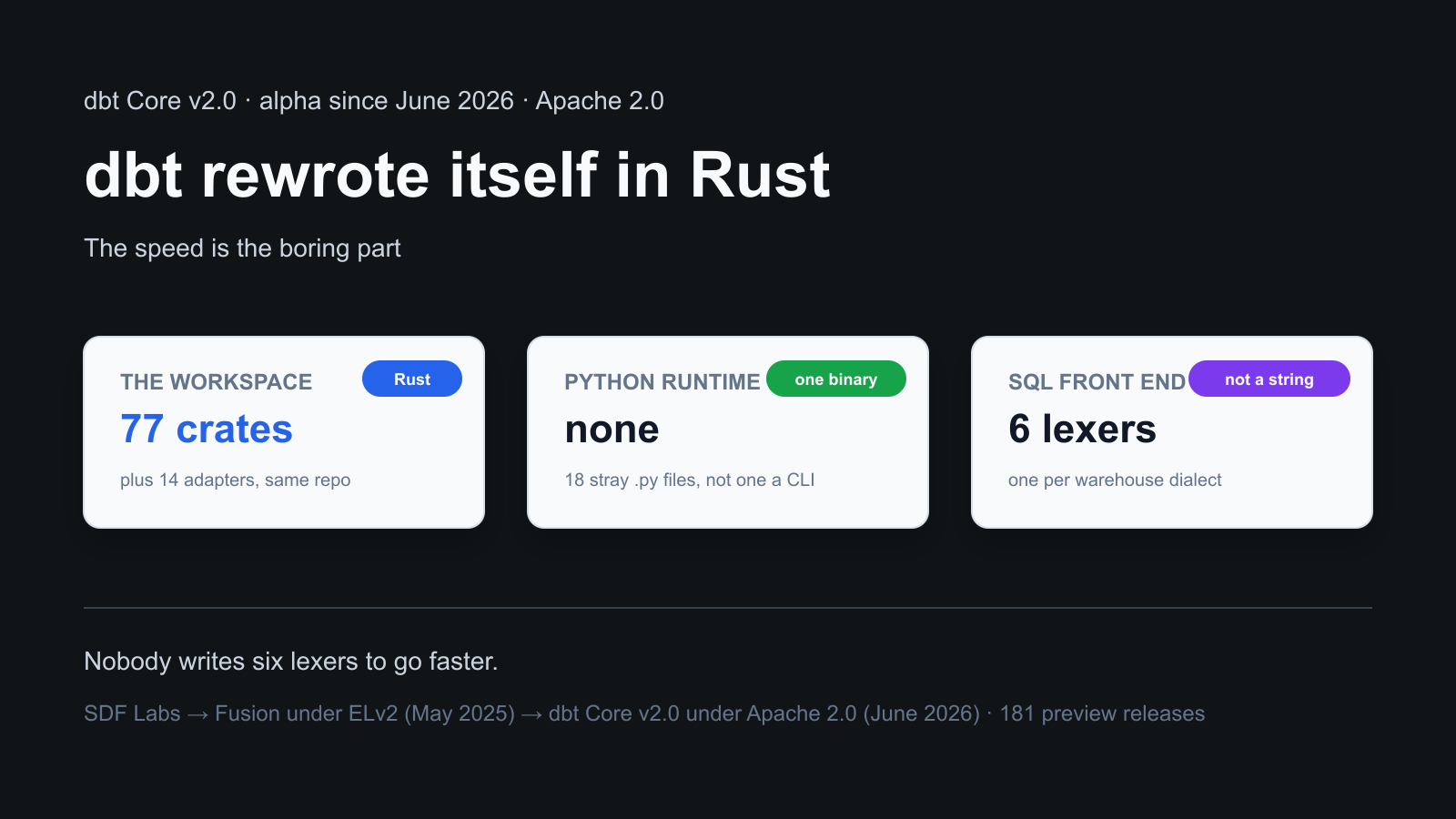
I opened a bug report against dbt and found a codebase nobody had told me about: 77 Rust crates where the Python used to be. This is what the rewrite is actually for, why the marketing undersells it, and what I broke loose while poking at it — two fixes, both for bugs that never printed an error.
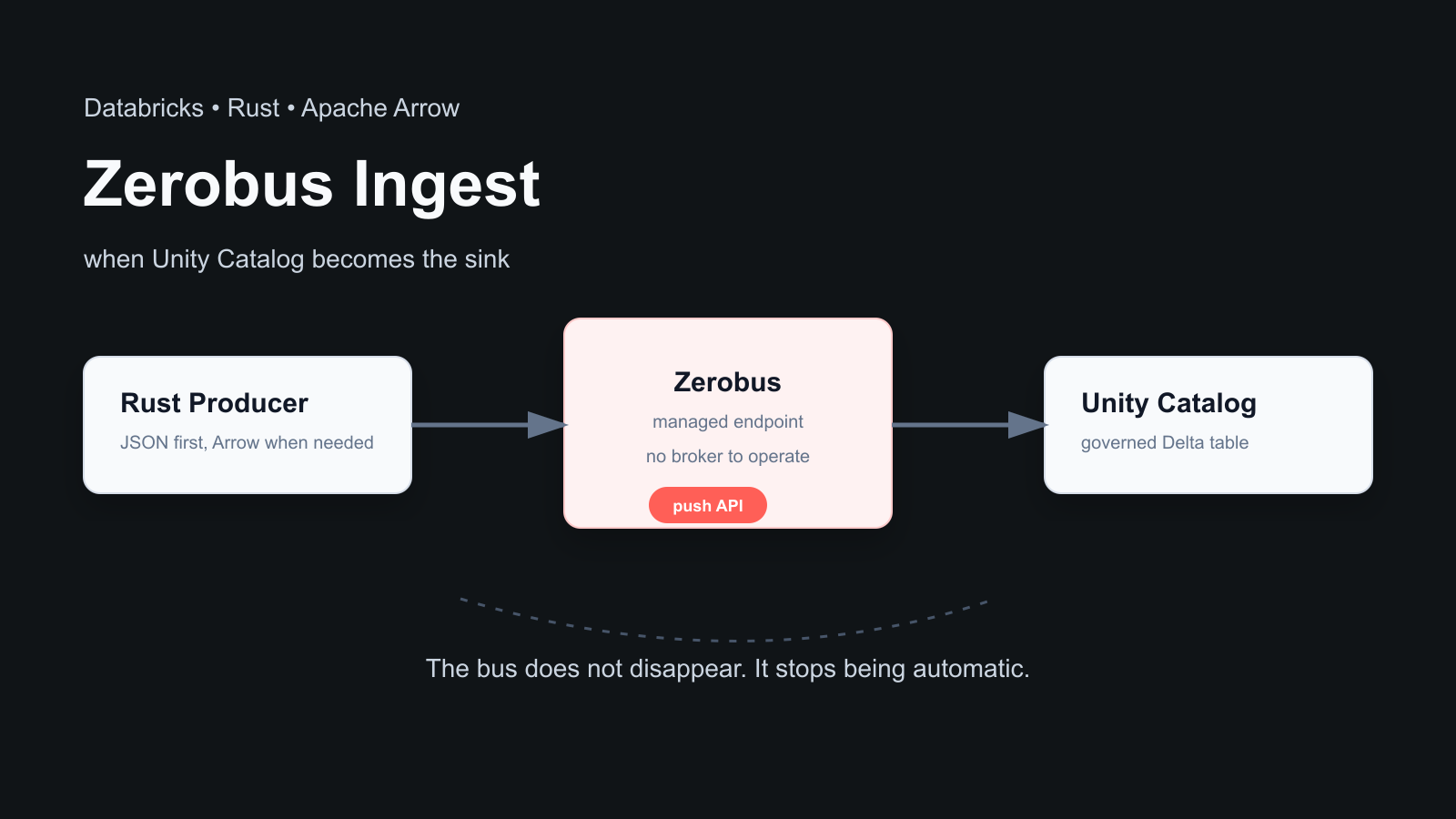
In the dlt+dbt post the contract was a Unity Catalog schema. With Zerobus Ingest I moved the same question to the producer edge: when the sink is already a governed Delta table, do you really need a bus in the middle?

Brain is a Git-backed Markdown knowledge base. Brain UI is the Rust/Leptos control plane on top of it. This is the system, the connection between the two halves, a real config-driven taxonomy, and the honest reasons I’m putting the core in the open.
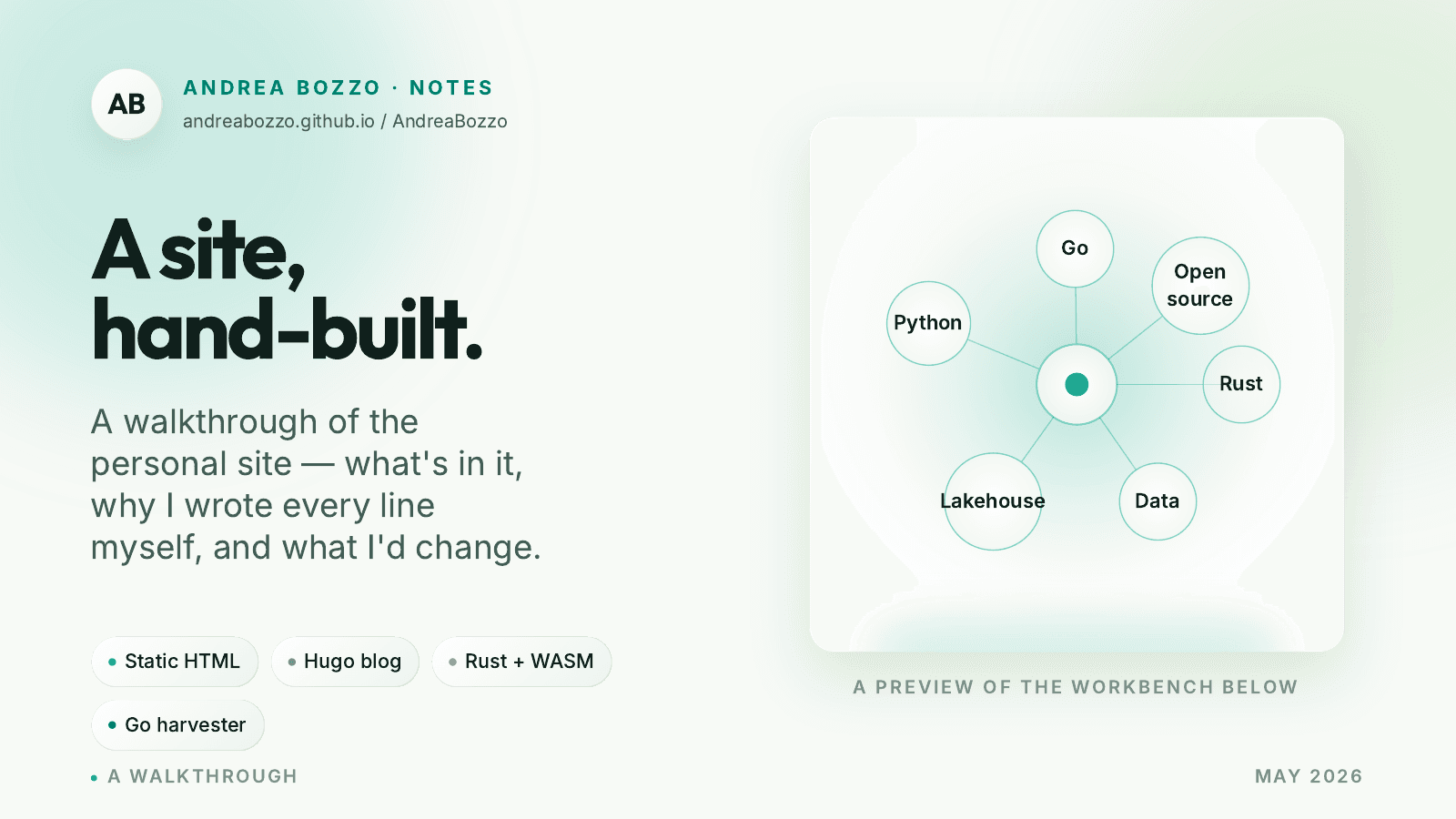
How I rebuilt my personal site as a versioned, reproducible static-site system with clear separation between landing page, blog, generators, and a small Go API companion.
Zero Grappler is a small no_std crate that applies a data-pipeline mindset to embedded ML: three traits, two async tasks, compile-time buffer sizing, zero allocations. This post is about the design choices — not yet a hardware report. The Pico 2 W smoke test on real silicon is still ahead of me.
Two Rust projects, one conceptual divide. Ares fetches arbitrary web pages and uses LLMs to extract structured data; Ceres harvests metadata from CKAN portals and indexes it semantically. Together they show what it looks like to move from scraping scripts to production data pipelines.
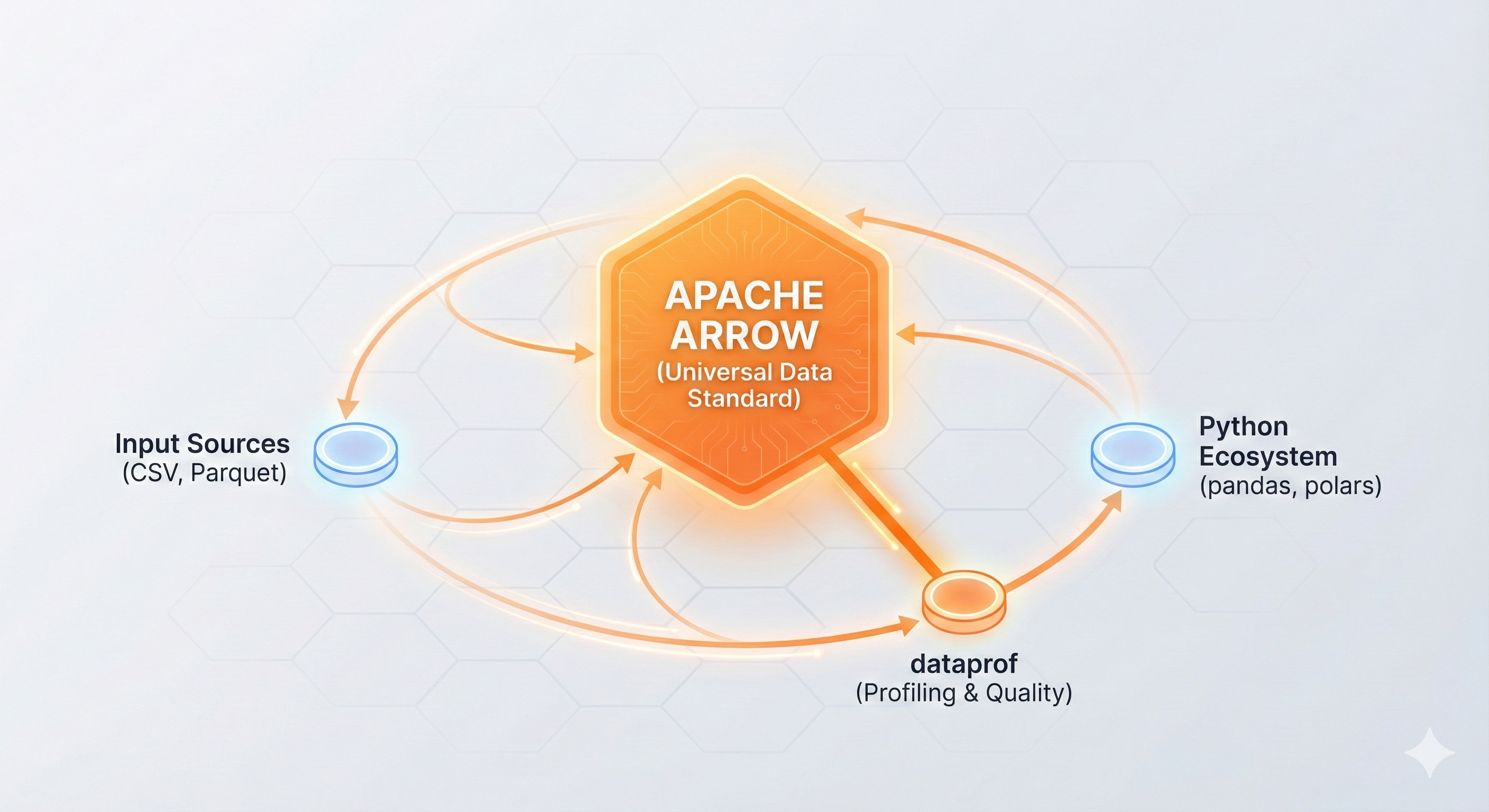
A design story of dataprof: why I built a profiler around Apache Arrow, how it changed the architecture, and how this journey led to contributions to arrow-rs’ Parquet reader.

A technical exploration of async/await in Python and Rust: how the same syntax hides completely different execution models, with practical examples from contributions to Tokio and Python projects.